
Test Drive  , our AI Chatbot - get instant regulatory answers, free and live! Try Now
 March 18, 2026
Regulatory affairs professionals have long operated in a world of impossible demands: monitor hundreds of global agencies simultaneously, interpret evolving guidance in real time, and maintain submission-ready documentation, all without missing a beat. AI Chatbots for Regulatory Intelligence are fundamentally rewriting the rules of that game. They hint towards a structural shift in how life sciences organizations access, interpret, and act on regulatory information and the organizations that recognize this early will carry a formidable competitive advantage.
Here is the uncomfortable reality: most regulatory intelligence workflows are broken. Not because the professionals running them lack expertise, quite the opposite. It’s because the volume, velocity, and complexity of regulatory data have outpaced human-scale processing. The FDA alone issued over 1,200 guidance documents, notices, and rule changes in 2023. The EMA, PMDA, CDSCO, ANVISA, and dozens of other agencies generate comparable output. Tracking it all manually? That’s never a strategy.
Traditional regulatory monitoring tools have helped -> keyword alerts, document repositories, database subscriptions. But aggregating data is not the same as analyzing it. There’s a crucial gap between having information and understanding what it means for your specific product pipeline, therapeutic area, and submission timeline.
That gap is exactly where AI-driven regulatory research earns its keep.
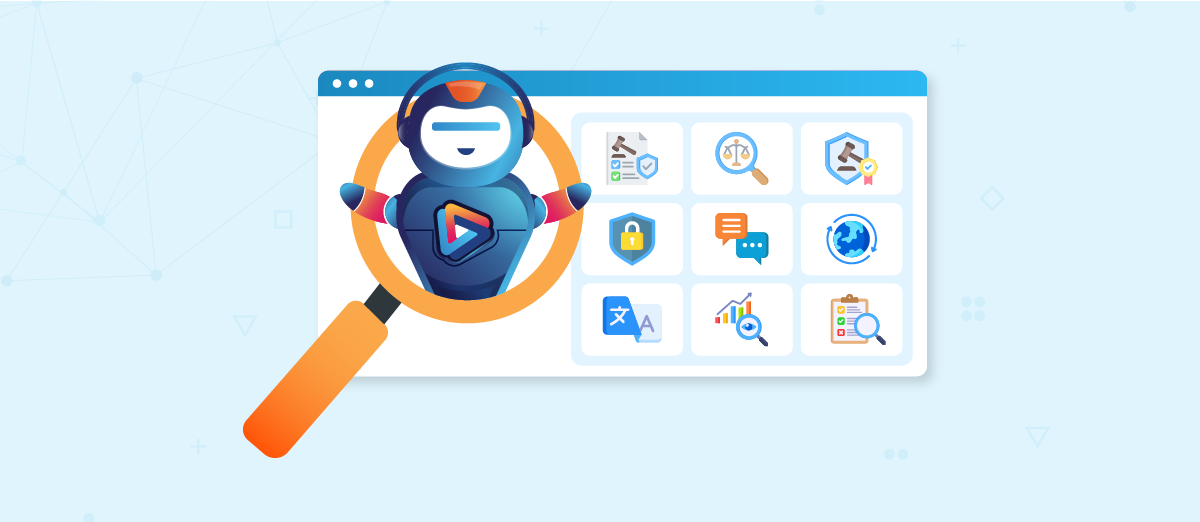
Modern AI compliance technology, particularly LLM-based chatbots purpose-built for regulatory affairs, performs several functions that were previously manual, slow, or simply impossible at scale:
That’s a meaningful capability stack. But here’s the thing, it only works when the underlying data is accurate, current, and properly governed. An AI chatbot trained on stale or incomplete regulatory content is worse than a well-maintained spreadsheet. Garbage in, compliance risk out. At freyr, our regulations repository has been built with utmost experience of over 15+ years by our experts.
There’s a dangerous tendency in the market to treat ‘AI-powered’ as synonymous with ‘reliable.’ It’s not. The single most important due diligence question any regulatory team should ask a vendor isn’t about the model architecture, it’s about the data sourcing, update frequency, and coverage scope. A beautifully designed chatbot trained on year-old guidance documents is a liability, not an asset.
Let’s get concrete.
McKinsey Global Institute research has long established that knowledge workers spend roughly 20% of their working week searching for and gathering information. For regulatory professionals navigating simultaneous submissions across multiple jurisdictions, that figure likely skews higher and the cost compounds fast. The flip side is equally striking: a 2024 empirical analysis published in Applied Clinical Trials Online found that companies using AI/ML-enabled tools in regulatory submission activities reported an average 18% mean cycle time reduction, with submissions recording the highest time savings of any activity category assessed.
This is where regulatory workflow efficiency becomes more than a buzzword. When a regulatory affairs manager can query a chatbot and receive a consolidated summary of EMA’s recent oncology guidance updates, with source citations, in under two minutes instead of two hours, the cumulative organizational impact across a year is substantial.
Consider a mid-sized biotech preparing IND submissions across three therapeutic areas simultaneously. Their regulatory team of 8 is managing 40+ active projects. Compliance research automation in this context means radically reducing the research burden on each team member, allowing them to operate at a tier of complexity their current headcount could not otherwise sustain.
Specific use cases where AI in regulatory affairs has demonstrated measurable value:
None of this eliminates the need for expert judgment. It eliminates the need for expert judgment to be applied to information gathering.
The regulatory sector has unique requirements that make AI deployment more consequential than in most industries. A chatbot that talks a marketing claim is embarrassing. A chatbot that talks a regulatory requirement and influences a submission decision is a patient safety and business continuity issue.
This is the hallucination problem, and it’s real. General-purpose LLMs, the kind accessible through consumer-facing interfaces, are not appropriate tools for regulatory intelligence research. They have no guaranteed connection to current regulatory databases, they cannot verify their own outputs against authoritative sources, and they are not designed for citation integrity.
Purpose-built regulatory AI systems address this through:
Recent benchmarking conducted by regulatory technology research groups suggests that purpose-built regulatory AI tools achieve citation accuracy rates significantly above 90% on well-defined regulatory research tasks, a meaningful contrast to general-purpose models operating in the same domain [Regulatory Focus, 2024].
The reality is often messier than it looks in vendor pitch decks. Deploying AI compliance technology inside a regulated organization is an organizational change initiative. And most life sciences companies are not treating it that way.
The teams most likely to succeed with AI regulatory analysis share a few characteristics: they have clear executive sponsorship, they involve their most experienced regulatory professionals in tool selection and validation, and they invest in change management from day one.
This matters because regulatory AI tools are only as valuable as the judgment applied to their outputs. Professionals who understand the regulatory landscape deeply are better positioned to evaluate AI-generated analysis critically, to catch the edge case, identify the missing consideration, or recognize when a query is ambiguous enough to require reformulation.
We’re in a transitional period where ‘AI-assisted’ regulatory work requires more skill to do well, not less. The professionals who thrive will be those who develop fluency with AI tools while deepening their domain expertise, not those who assume the AI handles the complexity so they don’t have to. The ceiling on AI regulatory analysis is always the user’s regulatory knowledge. That’s not a limitation of the technology. It’s actually the right design.
Before committing to any regulatory AI platform, a serious evaluation should cover:
The organizations getting the most value from AI-driven regulatory research are those that approached vendor evaluation with the same rigor they’d apply to a GxP software validation.
Meet freya: Your AI-Powered Regulatory Intelligence Advisor
If you’re ready to move from curiosity to operational advantage, freya was built precisely for this moment.
freya is a purpose-built AI regulatory intelligence chatbot designed specifically for life sciences professionals. It delivers real-time regulatory horizon scanning, cross-jurisdictional analysis, guidance document Q&A, and compliance research automation, all grounded in a continuously updated, citation-backed regulatory repository.
Here’s what makes freya different from generic AI tools:
freya doesn’t replace your regulatory expertise. It amplifies it, giving your team the bandwidth to focus on the high-judgment, high-stakes work that genuinely requires human insight.
Take freya for a test drive or try out our 14-Day Free Trial!
Experience firsthand how AI Chatbots for Regulatory Intelligencecan transform your team’s capacity. No lengthy procurement process. No infrastructure setup. Just log in, ask your first regulatory question, and see what a genuinely purpose-built tool can do.
Start your free trial today and join the regulatory teams already operating at the speed the modern compliance environment demands.







Get your regulatory dose of information delivered straight to your inbox every month!
Subscribe Now